
Views: 0 Author: Fenhar Publish Time: 2026-07-01 Origin: Site


If you’ve ever watched a powerful break shot shatter the rack with a sharp, cracking sound, you’ve witnessed what a well-chosen tip can do. That sound isn’t just about arm speed—it’s about what’s glued to the end of your shaft. For players who want that same explosive performance shot after shot, without constantly reshaping or replacing their tip, phenolic compounds have become the go-to solution.
Unlike the leather tips you’ll find on most playing cues, a phenolic tip is engineered for one specific job: delivering maximum force with minimum give. And because it’s built to withstand repeated, violent impacts, it earns the “wear-resistant” label honestly—not as a marketing gimmick, but as a measurable advantage over time.
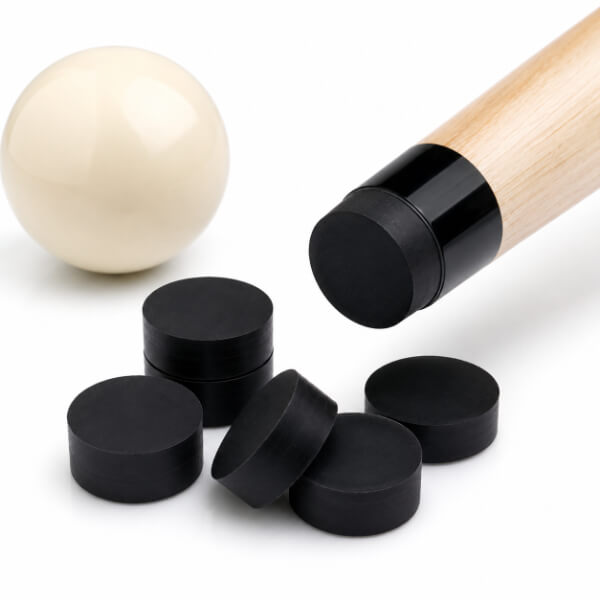
Here’s where the manufacturing story truly matters. Top-tier phenolic cue tips aren’t molded into their final shape like cheap plastics or cast resins. Instead, they begin as high-density phenolic rods—solid, cylindrical billets of thermoset material that are precision-machined down to the finished product.
Why does this matter for players? When you machine a tip from a solid phenolic rod, rather than molding it, you preserve a uniform, void-free internal structure. Molding can introduce micro-pockets of air or inconsistent density across the diameter. Rods, on the other hand, offer homogeneous compression strength from the center all the way to the outer edge. That means every single hit delivers the exact same feedback, with no weak spots that could crack or deform under the brutal force of a break shot.
For us as material suppliers, controlling the rod quality—resin content, fiber reinforcement, curing cycles, and mechanical stability—directly translates to how the final cue tip performs at the table. A rod with inconsistent hardness will produce tips that vary batch to batch, which is a nightmare for serious players and cue technicians alike. Consistent rod specifications are the silent backbone of a great phenolic tip.
In terms of raw physics, phenolic resin is a thermosetting polymer—hard, dense, and resistant to compression. When you strike the cue ball with a tip machined from a premium rod, almost all of the kinetic energy from your stroke travels straight through without spongy absorption. That’s why you’ll hear a louder, higher-pitched click on contact, and why the cue ball seems to explode off the tip with less effort from your arm.
But durability is the real headline here. Leather tips, even the so-called “super hard” varieties, tend to mushroom—the edges flatten and spread outward after heavy use. They also compress over time, changing their height and shape, which alters your stroke feel. Phenolic tips resist both issues remarkably well, precisely because the rod material is engineered for structural integrity under cyclic loading. You can hammer dozens of break shots in a single practice session, and the tip’s profile remains nearly identical to when you first installed it.
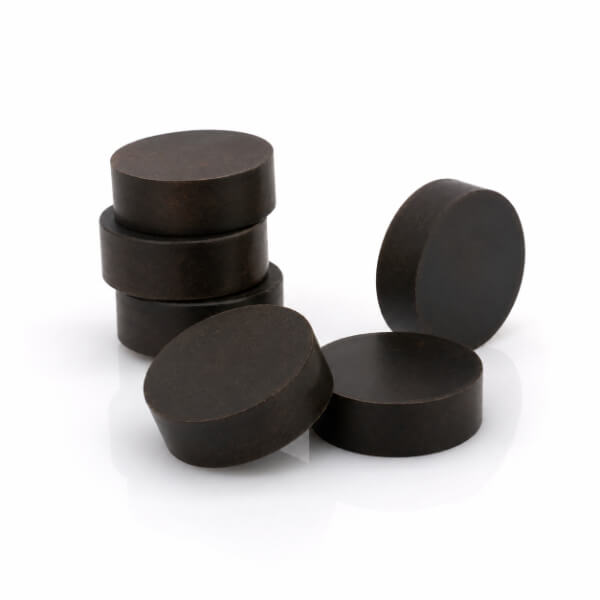
Most phenolic tips on the market come in a 14mm diameter as the standard, though you’ll occasionally spot 12.9mm versions for narrower shafts. Almost all are sold as “trim‑to‑fit” blanks—oversized discs that a technician sands down to match the exact ferrule diameter of your cue. From a manufacturer’s viewpoint, these blanks are sliced from the same phenolic rod stock with precise thickness control, ensuring every piece starts with the same material density.
In terms of aesthetics, you typically have two color options: black or brown. The color comes from specific pigments added during the resin formulation stage, and it doesn’t affect performance—it’s purely a visual preference, often chosen to complement the shaft wood or the ferrule material.
Here’s where many players get into trouble. Because phenolic is so hard, it doesn’t sand or trim like leather. Standard razor blades and sandpaper will struggle, and if you’re not careful, you can easily chip the tip or, worse, damage your ferrule. The installation process requires a lathe or a precise sanding drum, plus the right grit sequence to shape the dome without overheating the resin (which can cause brittleness).
Always have a professional cue technician handle the installation. A good tech will also check the glue bond—phenolic tips need a specific adhesive that adheres well to both the dense rod material and the wood/ferrule surface. Skip this, and you risk the tip flying off mid‑break, which is both embarrassing and potentially dangerous.
This can’t be overstated—a phenolic tip is not a substitute for your everyday playing tip. Use it on your break cue or your jump cue, but never on the cue you rely on for finesse shots, draw, follow, or side spin. The same hardness that gives you explosive power also makes it nearly impossible to grip the cue ball for controlled English. You’ll get inconsistent spin, less feel for speed, and a harsh, jarring feedback on soft touches.
So if you’re building a two‑cue setup—one for playing, one for breaking—the phenolic tip belongs exclusively on the latter. Many tournament players even carry a separate jump cue with a phenolic tip for those tricky clearance situations, then switch back to their leather‑tipped playing cue for the next shot.
| Aspect | Phenolic Tip (from Rod Stock) | Hard/Extra‑Hard Leather Tip |
| Primary role | Break & jump | All‑around play |
| Material source | Machined from solid phenolic rods | Tanned and compressed animal hide |
| Hardness level | Extremely rigid; homogenous density | Firm but compressible |
| Energy transfer | Near‑total; minimal loss | Good, but some absorption |
| Wear over time | Minimal reshaping needed | Mushrooming and flattening common |
| Spin & control | Poor; | Excellent; |
| Typical lifespan | Several seasons of heavy use | Weeks to months, depending on play |
Even after proper installation, a new phenolic tip won’t feel exactly like a broken‑in leather tip. The surface is slicker out of the box, and while it holds chalk decently, you’ll need to rough it up lightly with a tip pick or fine sandpaper to get optimal chalk retention. Some players also notice that the first few breaks feel “glassy” or that the cue ball seems to skid more—that fades as the tip develops microscopic texture from normal use.
Give yourself about 20 to 30 powerful breaks to adapt. You’ll start to appreciate the crisp feedback and the predictable rebound off the cue ball. And once you’re comfortable, you’ll likely never go back to leather for your break cue.
If you break hard and break often, a wear‑resistant phenolic tip isn’t just an accessory—it’s a performance investment. And as someone who understands the material side, remember that the journey from phenolic rod to finished tip is what determines ultimate quality. Uniform rod density, precise curing, and consistent mechanical properties are what separate a tip that lasts seasons from one that cracks within weeks.
You’ll spend less time maintaining your tip, more time practicing your actual break technique, and you’ll enjoy a noticeable bump in cue ball speed for the same stroke effort. Just remember to pair it with the right cue, get it professionally fitted, and keep it away from your delicate finesse shots.
In the end, the best players don’t choose one material over another because it’s trendy—they choose it because it solves a real problem. Phenolic tips solve the problem of wear, inconsistency, and power loss. And for manufacturers, ensuring those tips start with premium phenolic rods is the first—and most critical—step toward that solution.


