
Views: 0 Author: Site Editor Publish Time: 2026-01-14 Origin: Site


Defence systems demand materials that combine reliable electrical insulation with mechanical strength, thermal tolerance and predictable behaviour under harsh environments. Glass-reinforced thermoset laminates—commonly sold as G10, G11, FR-4, GPO-3 and glass-mat epoxy grades (e.g., EPGM203)—are a proven family of products used across avionics, land vehicles and naval platforms. This article explains practical selection criteria and design trade-offs so engineers and procurement specialists can match material grade to application requirements.
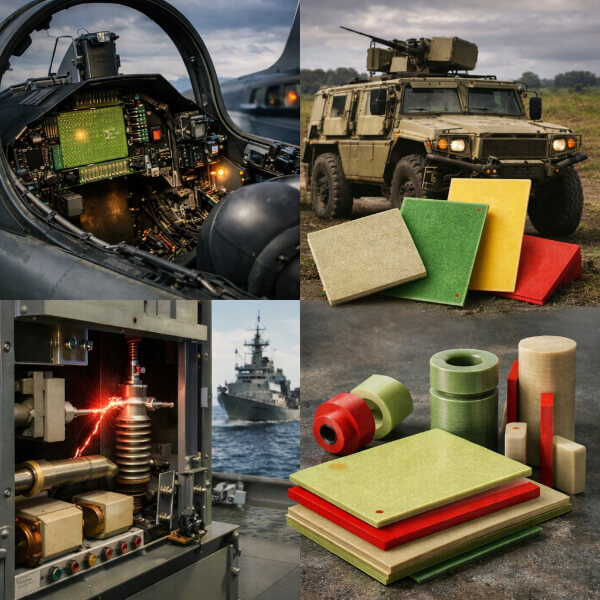
FR-4: A flame-retardant glass-epoxy laminate frequently used for printed circuit substrates and general-purpose electrical insulation where UL/IEC flammability performance is required. FR-4 balances dielectric reliability with manufacturability in mass production.
G10: A woven-glass epoxy laminate optimized for high mechanical strength and dimensional stability. Favors rugged structural insulators and machined parts that must withstand mechanical abuse.
G11 (high-TG glass-epoxy): Formulated for elevated continuous-use temperatures and improved retention of mechanical and electrical properties under sustained heat; chosen when thermal margins are tight.
GPO-3: A glass-polyester/polymer laminate engineered for exceptional arc, tracking and flame behaviour—often specified for busbars, switchgear supports and other components where arcing or tracking risk exists.
EPGM203 / glass-mat epoxy: A chopped-glass mat epoxy that provides isotropic mechanical response and consistent through-thickness dielectric strength—suitable for punched washers, bushings and components that require uniform behaviour regardless of orientation.
Maximum and continuous operating temperature
Verify both the material glass transition (Tg) and the long-term continuous use temperature. Choose G11 or high-Tg FR-4 variants when repeated high-temperature exposure or thermal cycling is expected.
Dielectric strength and surface tracking resistance
Specify dielectric strength (kV/mm) and comparative tracking index (CTI) consistent with maximum working voltages and expected contamination (salt spray, dust). For medium-voltage and arc-exposure scenarios, favor materials with high CTI and proven track/arc ratings such as GPO-3 or selected EPGM formulations.
Fire, smoke and toxicity performance
For enclosed platforms—cockpits, combat vehicles, ship compartments—prioritize laminates and formulations that meet UL94/IEC smoke and toxicity expectations. Flame-retardant FR-4 or appropriately treated GPO-3 grades reduce risk of fire propagation and hazardous off-gassing.
Mechanical demands and orientation sensitivity
Use woven-cloth laminates (G10/G11/FR-4) for high directional strength and load-bearing parts; use glass-mat laminates (EPGM203) where isotropic punching, bending or through-thickness toughness is required. Consider impact, compressive strength and creep under load when selecting thicker sections or long-span parts.
Environmental durability and chemical exposure
Confirm resistance to moisture uptake, salt spray and fuels/solvents expected in the field. Naval and some ground applications require low moisture absorption grades and supplier evidence of long-term ageing performance.
Clear, testable specification language prevents ambiguity during qualification. Include specific references and acceptance criteria such as:
Dielectric testing per IEC 60243 / ASTM D149 (short-time breakdown voltage).
Tracking resistance per IEC 60112 (CTI) with defined pass/fail limits.
Flame and smoke performance per UL94/IEC fire testing and any applicable naval fire-toxicity standards.
Mechanical tests (flexural/compressive) and thermal characterization (Tg by DSC/TMA).
Environmental conditioning (thermal cycling, humidity soak, salt spray for naval parts) with acceptance limits.
Require traceable lot test reports and, for mission-critical orders, supplier sampling/lot certificate reviews.
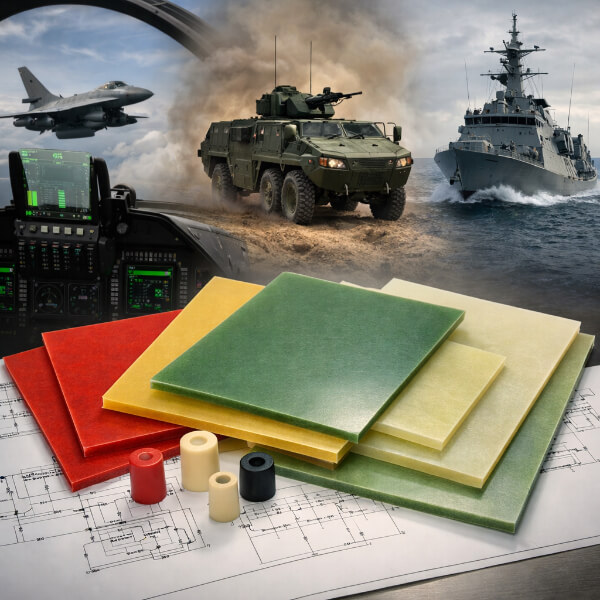
Machining: Woven laminates can be harder on tooling; specify tooling recommendations and surface finish tolerances.
Bonding and adhesives: Verify adhesive compatibility—high-Tg resins sometimes need specific primers or higher cure temperatures.
Surface treatment: For varnishing, coating or potting, follow supplier pre-treatment guidance to ensure adhesion and preserve dielectric properties.
Quality control: Ask for material passports: datasheet, RoHS/REACH statements, batch test reports (dielectric strength, Tg, flexural). Implement sample-based accelerated ageing for new suppliers.
Avionics standoffs, PCB supports: high-TG FR-4 or G11 for thermal stability and low outgassing.
Switchgear barriers, bus supports: GPO-3 or high-CTI EPGM grades for arc and tracking resistance.
Punched spacers, washers, bushings: EPGM203 / glass-mat epoxy for isotropic and predictable through-thickness dielectric strength.
Summary
Engineering plastics for defence electrical insulation require a careful balance of thermal stability, dielectric performance and mechanical durability—selecting the right laminate (G10, G11, FR-4, GPO-3 or EPGM203) ensures reliable operation across air, land and naval systems. Match material Tg, dielectric strength and CTI to the application, verify flame/smoke and environmental test results, and demand traceable datasheets and lot certificates to reduce field risk. By prioritizing high-TG grades for heat-exposed assemblies and arc-resistant or glass-mat options where tracking and isotropic performance matter, designers and procurement teams can shorten qualification time and improve long-term system resilience.


