
Views: 0 Author: Fenhar Publish Time: 2026-07-08 Origin: Site


When an engineer specifies insulation for medium-voltage switchgear, they're not just picking a material — they're making a bet on what happens during a fault. And in that moment, when an arc strikes at thousands of degrees, the difference between a melamine glass laminate and a standard epoxy board isn't theoretical. It's measured in milliseconds.
Everyone in the electrical insulation supply chain knows that materials should resist tracking and erosion. What fewer people discuss is how that failure actually unfolds inside a live switchgear compartment.
An electric arc is not just heat. It is a plasma column — ionized gas at 5,000°C to 20,000°C — carrying current between conductors that were never meant to connect. When that plasma touches a laminate surface, three things happen simultaneously, and they happen fast:
Surface carbonization — The resin binder in the laminate begins to pyrolize within fractions of a second. If the resin's molecular backbone contains carbon-rich chains that char into a conductive path, tracking begins immediately.
Thermal shock delamination — The instantaneous temperature differential between the arc-facing surface and the interior of the sheet creates internal stress that can separate plies — even before visible char appears.
Gas evolution and internal pressure — Decomposing resin releases volatile gasses inside the laminate. In a poorly chosen material, this creates micro-blisters that become permanent weak points.
A material that survives all three — without forming a carbon track, without delaminating, and without blistering — is doing something chemically remarkable. That material, in NEMA parlance, is glass cloth melamine.
Engineering Insight: Arc resistance in NEMA LI-1 is measured by ASTM D495 — the "dry arc resistance test" that applies a high-voltage, low-current arc to the material surface. The test doesn't measure how long the material lasts before burning through; it measures how long the surface resists becoming conductive. That's the critical distinction: arc resistance is about preventing the formation of a tracking path, not about thermal endurance.
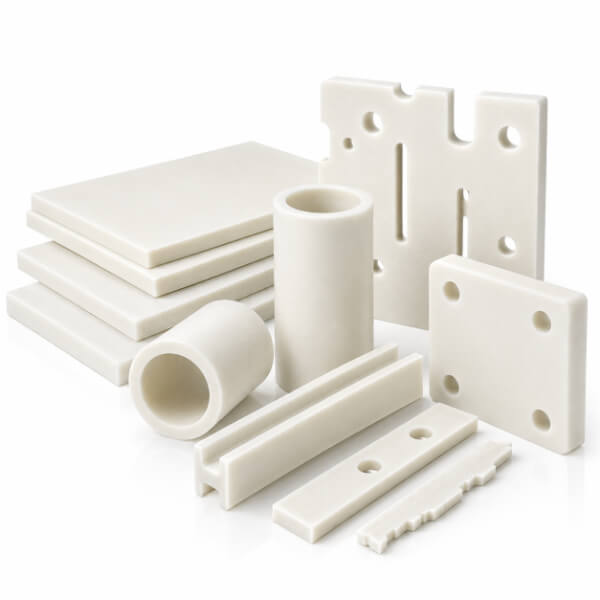
To understand why melamine laminates behave differently under arc conditions, you have to look at what happens to the resin molecule when it gets hot — really hot.
Epoxy resins — the binder in G-10, FR-4, and G-11 — are built around bisphenol-A diglycidyl ether chains. When they decompose under arc heat, those chains break into carbonaceous fragments that readily form conductive char. Worse, epoxy's decomposition temperature range (roughly 300°C to 450°C) overlaps heavily with the temperature range where tracking initiates on a laminate surface.
Phenolic resins fare somewhat better. Their aromatic ring structure provides inherent thermal stability, and they tend to form less conductive char than epoxies. This is why paper-phenolic grades (X, XX, XXX) and cotton-phenolic grades (C, CE, L, LE) have historically been used in arc-exposed applications. But phenolics have a ceiling — and that ceiling sits well below what melamine offers.
Melamine-formaldehyde resin is a fundamentally different animal. Its molecular structure is built around the triazine ring — a six-membered heterocycle with alternating carbon and nitrogen atoms. When melamine resin is exposed to arc temperatures:
The nitrogen-rich triazine rings release non-conductive gases (primarily nitrogen and ammonia) as they decompose, creating a self-extinguishing boundary layer at the arc-material interface.
The decomposition pathway preferentially breaks bonds that don't produce conductive carbon residues. The char that does form is heavily nitrogen-doped, making it electrically resistive rather than conductive.
The decomposition is endothermic — it absorbs energy from the arc rather than contributing to it. This is the same principle that makes melamine a flame retardant in other applications, but here it applies to arc quenching specifically.
This is not just academic chemistry. It means that when an arc strikes the surface of a G-5 or G-9 laminate, the material actively fights back — releasing arc-quenching gases, refusing to form a carbon track, and absorbing thermal energy rather than transmitting it.
Key Distinction: An epoxy laminate endures an arc event until it fails. A melamine laminate resists the arc chemically, through a decomposition mechanism that is inherently self-quenching. This is why the ASTM D495 arc resistance of melamine grades typically exceeds 180 seconds — compared to roughly 100-120 seconds for standard epoxy-glass grades.
Many engineers treat G-5 and G-9 as interchangeable — two melamine-glass laminates that do the same job. That's a misunderstanding that leads to over-specification, excess cost, or — worse — underperformance in the field.
The difference between G-5 and G-9 comes down to resin content control and manufacturing discipline, not raw material chemistry. Both grades use woven E-glass cloth impregnated with melamine-formaldehyde resin. But the NEMA specification for G-9 imposes tighter limits on resin-to-glass ratio and requires demonstrably superior arc resistance performance:
| Property | G-5 / MFGC201 / HGW2272 | G-9 (NEMA Premium Grade) |
| Standard Reference | IEC 60893-3-3 MFGC201; NEMA LI-1 G-5; DIN 7735 HGW2272; MIL-I-24768/8 GMG | IEC 60893-3-3; NEMA LI-1 G-9; DIN 7735; MIL-I-24768/1 GME |
| Specific Gravity | 1.90 | 1.85 |
| Tensile Strength | 70,000 psi (483 MPa) | 70,000 psi (483 MPa) |
| Flexural Strength | 55,000 psi (379 MPa) | 55,000 psi (379 MPa) — ≥ 180 MPa guaranteed |
| Dielectric Strength | ≥ 35 kV/mm | ≥ 40 kV/mm |
| Thermal Class | Class B (130°C) | Class F (155°C) |
| Arc Resistance (ASTM D495) | ≥ 180 seconds | ≥ 180 seconds (with tighter lot-to-lot consistency) |
| Hardness (Rockwell M) | 115 | 115 |
| Resin Control | Standard manufacturing tolerance | Tighter resin content control per NEMA LI-1 |
The meaningful difference is not in the peak numbers — both grades are exceptionally arc-resistant. The difference is in consistency and thermal headroom. G-9's tighter manufacturing controls mean that every sheet from every batch will deliver arc resistance within a narrow performance window. For a switchgear OEM shipping to markets with strict type-testing requirements, that consistency translates directly into certification confidence.
G-9 also carries a Class F (155°C) thermal rating versus G-5's Class B (130°C). In practice, this means a G-9 laminate can sit closer to a heat source — busbar connections, for example — without creeping toward its glass transition temperature over years of thermal cycling.
Arc resistance is required but the environment is Class B (≤130°C)
Cost sensitivity favors a standard-grade melamine laminate
Application is in general-purpose switchgear barriers and arc chute dividers
Volume production of components where G-9's tighter specs add cost without performance benefit
MIL-I-24768/8 GMG qualification is sufficient for the end-use specification
Operating temperature exceeds 130°C, requiring Class F (155°C) rating
Stringent type-testing demands lot-to-lot arc resistance consistency
Higher dielectric strength (≥40 kV/mm) is a design requirement
MIL-I-24768/1 GME qualification is specified in procurement documents
The component sits in a safety-critical arc path where performance variance is unacceptable
Arc-resistant insulation isn't a luxury — it's a regulatory and safety requirement in a specific set of electrical environments. Understanding where G-5 and G-9 fit in the broader landscape of insulation choices starts with identifying the applications where nothing else will do.
This is the textbook application for melamine-glass laminates. Inside a circuit breaker's arc chute, the material must repeatedly survive direct arc impingement without tracking. A single carbonized path across an arc chute divider can create an unintended current path that defeats the entire quenching mechanism. Melamine's nitrogen-rich decomposition is uniquely suited here — the gases evolved during arc exposure help push the arc into the cooling plates rather than sustaining it along the divider surface.
Medium-voltage switchgear compartments (typically 1 kV to 38 kV) use insulating barriers between phases to prevent flashover. During a fault, these barriers see arc voltages that can exceed the normal operating voltage by orders of magnitude. A barrier made from a material with poor arc resistance can track within one fault event — meaning the switchgear passes its factory test but fails in the field when it matters most. G-5 and G-9, with their ≥180-second ASTM D495 arc resistance ratings, provide a margin that epoxy and phenolic grades simply cannot match.
Busbar insulation is a compound problem: the material must handle continuous thermal load from normal current-carrying, withstand the mechanical clamping force of bolted connections, and survive an arc fault without turning into a carbon bridge between phases. This is where G-9's Class F thermal rating combined with arc resistance makes it the preferred choice for high-current busbar systems in data centers, industrial plants, and utility substations.
On-load tap changers operate in oil-filled transformer environments where arcing is a normal operating condition, not a fault event. Each tap change generates a small arc at the contact surface. The insulating board supporting those contacts must withstand thousands of these micro-arcs over the transformer's service life without developing a tracking failure. Melamine laminates — particularly G-9 — have been specified in this application for decades precisely because their arc resistance doesn't degrade with cumulative exposure the way some other thermosets do.
Engineering Note: When specifying insulation for oil-immersed applications like tap changers, verify that the melamine laminate's moisture absorption characteristics are compatible with the oil system. Both G-5 and G-9 exhibit low moisture absorption, but always confirm with your supplier that the specific resin formulation is rated for continuous oil exposure at the application's maximum operating temperature.
To understand where melamine-glass laminates sit in the broader material landscape, it's useful to compare them head-to-head against the alternatives that engineers commonly consider for arc-exposed applications.
| Material Grade | Resin System | Arc Resistance (ASTM D495) | Arc Chute Suitable? | Thermal Class |
| G-9 | Melamine-formaldehyde | Best-in-class (≥180 sec) | Yes — preferred | Class F (155°C) |
| G-5 | Melamine-formaldehyde | Excellent (≥180 sec) | Yes | Class B (130°C) |
| GPO-3 | Unsaturated polyester | Very good (≥180 sec possible) | Conditional | Class F (155°C) |
| G-7 | Silicone | Good (≥180 sec possible) | Conditional — soft surface | Class H (180°C) |
| CE/LE Phenolic | Phenolic (cotton fabric) | Moderate (~100-150 sec) | Not recommended | Class E (120°C) |
| XXX Paper Phenolic | Phenolic (paper) | Moderate (~100-130 sec) | Not recommended | Class E (120°C) |
| G-10 / FR-4 | Epoxy | Limited (~100-120 sec) | No | Class B-F (130-155°C) |
| G-11 | Epoxy (high-temp) | Limited (~100-120 sec) | No | Class F-H (155-180°C) |
A few observations jump out from this comparison:
GPO-3 deserves a footnote. Polyester-glass laminates can achieve competitive arc resistance numbers on paper, but their performance in high-humidity conditions degrades more noticeably than melamine. For outdoor or condensation-prone switchgear, melamine is the safer bet.
G-7 silicone laminate is an interesting alternative when the primary requirement is extreme temperature resistance (Class H, 180°C). But silicone's inherently softer surface — with lower hardness than melamine — makes it a poor choice for components that see mechanical abrasion from moving contacts.
Epoxy grades should be categorically excluded from arc chute and direct arc-path applications. Their carbon-tracking tendency under arc exposure is a fundamental limitation of epoxy chemistry, not a manufacturing defect.
Not all G-5 and G-9 laminates are created equal — even when they share the same NEMA grade designation. The manufacturing process introduces variables that directly affect in-service arc resistance, and specifiers who understand these variables are better equipped to qualify suppliers.
The arc resistance of a melamine laminate depends on having enough resin at the surface to provide the nitrogen-rich char chemistry. If the press cycle squeezes out too much resin — leaving a resin-starved surface with exposed glass fibers — the arc resistance at that surface can drop significantly. A well-controlled manufacturing process aims for a resin content typically in the 35-45% range by weight, with uniform distribution through the thickness.
Melamine-formaldehyde undergoes a condensation polymerization that releases water as a byproduct. If the press cycle is too aggressive — too much heat too quickly — water vapor gets trapped inside the laminate as microvoids. Under arc exposure, these voids become nucleation sites for delamination. A carefully profiled cure cycle with staged temperature ramps and adequate dwell time at each stage minimizes residual voids and maximizes crosslink density.
Melamine laminates benefit from a post-cure bake after the initial press cycle. This step drives the condensation reaction closer to completion, eliminates residual volatiles, and stabilizes the laminate's dimensions. Suppliers who skip or shorten post-cure to reduce cycle time may produce laminates that look identical on the receiving dock but exhibit lower arc resistance and greater dimensional drift in service.
Supplier Qualification Tip: When evaluating a G-5 or G-9 laminate supplier, ask about their resin content control methodology and request batch-level arc resistance test data — not just the "typical values" from a product brochure. A supplier that can provide statistical process control (SPC) data on arc resistance across multiple production batches has the manufacturing discipline that G-9's tighter NEMA specification demands.
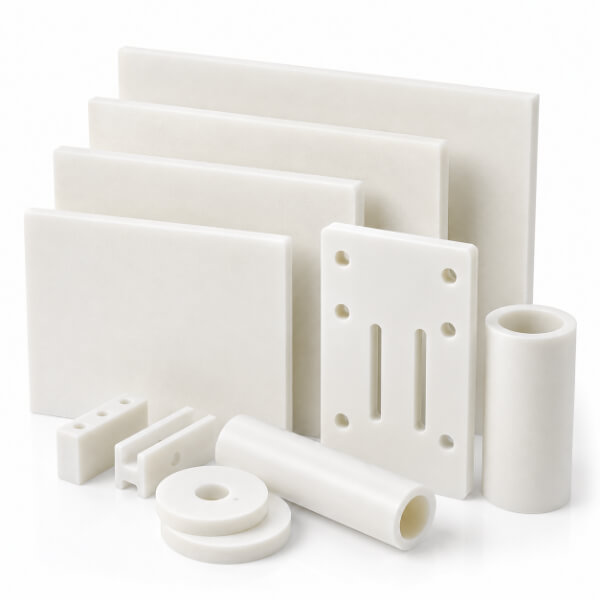
A laminate's arc resistance is a surface property. Anything that alters the surface — particularly machining operations — can compromise it. This is a common failure mode that goes undiagnosed because the incoming material passed incoming inspection but the finished part failed in service.
Edge quality matters. A rough-sawn or dull-tooled edge exposes glass fiber ends and creates micro-cracks that serve as arc initiation points. CNC-machined components for arc-exposed applications should be produced with sharp carbide tooling and appropriate feed rates to minimize edge damage.
Coolant selection. Water-based coolants can penetrate the machined surface of a melamine laminate and, if not thoroughly dried before service, reduce the effective arc resistance at that surface. For critical arc-path components, dry machining or air-blast cooling is preferred.
Post-machining bake. Some switchgear OEMs specify a low-temperature post-machining bake (typically 100-120°C for 2-4 hours) to drive off any moisture absorbed during fabrication. This step is especially important for G-5 components that will operate at or near their Class B thermal limit.
Surface sealing. For the most demanding arc chute applications, some manufacturers apply a thin melamine-rich surface seal coat after machining. This restores the pristine resin-rich surface that the original laminate had fresh off the press.
After two decades of manufacturing melamine laminates and supporting engineers who specify them, we've observed that the G-5 versus G-9 decision almost always comes down to one of three factors:
Thermal requirement is the tiebreaker.
If your application runs continuously above 130°C, G-9 is the only option. The Class F rating isn't a suggestion — it's a thermal aging classification that directly correlates with insulation life. Below 130°C, the choice opens up.
Certification path dictates the grade.
If your end customer's procurement specification calls out MIL-I-24768/1 (GME), you need G-9 — period. Similarly, if UL or IEC type-testing requires the higher dielectric strength floor of 40 kV/mm, G-9 is the path of least resistance. But if MIL-I-24768/8 (GMG) is accepted and 35 kV/mm is sufficient, G-5 may be the more cost-effective route.
Volume and lot-to-lot risk tolerance.
For high-volume production of non-safety-critical arc barriers — where a single out-of-spec sheet wouldn't create a field failure — G-5 is a rational choice. For safety-critical arc chute components that see direct arc impingement, the tighter lot consistency of G-9 is worth the premium.
Fenhar has been manufacturing G-5/MFGC201/HGW2272 and G-9 melamine glass laminates for over 20 years. We provide both standard sheet stock and CNC-machined finished parts to your specifications. Our engineering team can help you select the right grade, dimensions, and fabrication approach for your application.
G-5 and G-9 melamine glass cloth laminates occupy a specialized but irreplaceable position in the electrical insulation landscape. They are not general-purpose materials — they are purpose-built for environments where an electric arc is not a hypothetical worst-case scenario but an engineered-for operating condition.
The choice between them is rarely about "which one has better arc resistance." Both deliver class-leading performance by that metric. The choice is about thermal headroom, certification requirements, and manufacturing consistency — and understanding those distinctions is what separates a well-specified insulation system from one that passes factory acceptance testing but accumulates hidden degradation with every fault cycle.
In an industry where a single tracking failure can cascade into a catastrophic arc flash event, the material sitting between energized conductors is never just a sheet of laminate. It's the last line of defense. Melamine glass deserves to be taken seriously — not just as a product category, but as an engineering decision that has consequences.


