
Views: 0 Author: Site Editor Publish Time: 2026-01-08 Origin: Site


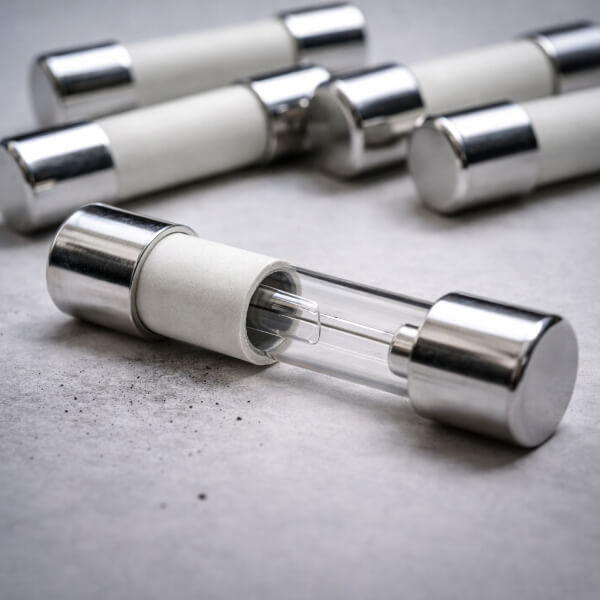
When a fuse clears, the materials around the fuse element face an intense, rapid combination of heat, ionized gas, and mechanical stress. The fuse housing must insulate during normal operation, physically support the element and end caps, and — crucially — help contain and extinguish the arc during a fault. G9 melamine tubes satisfy these needs through a balanced mix of electrical, mechanical and thermal performance that makes them particularly suitable for many modern fuse designs.

G9 refers to a glass-cloth reinforced melamine laminate constructed into a tube form. Its performance profile is shaped by two complementary components: a thermoset melamine matrix and woven glass reinforcement. Together they deliver:
Strong dielectric behavior even after exposure to humidity or wet conditions.
Resistance to surface tracking and formation of conductive char under arcing.
Mechanical stiffness and wear resistance so contact geometry and alignment stay consistent.
Flame-retardant chemistry and thermal stability for short-duration high-energy events.
Practical manufacturability: can be wound or machined to tight tolerances and finished for smooth internal surfaces.
These attributes reduce the risk that a fuse housing will degrade into a secondary failure mode (for example, sustaining an arc or developing a conductive path) when the fuse operates.
Manufacturers often weigh multiple materials when designing fuse bodies. Compared to other common choices:
Versus ceramics: G9 is less brittle and easier to machine or form, which lowers scrap and assembly breakage while retaining excellent insulation.
Versus cellulose or vulcanized fiber: G9 handles arcs and moisture far better, reducing tracking and long-term performance drift.
Versus basic phenolic laminates: melamine-based laminates typically show superior arc extinguishing and wet-environment dielectric retention.
This combination often leads to more reliable fuse behavior across a wider range of environmental conditions without the cost and handling drawbacks of brittle ceramics.
If you produce or specify G9 fuse tubes, consider these practical guidelines:
Choose fully cured, void-minimized laminates. Voids can promote localized heating or gas pockets during arcing.
Match wall thickness to the fuse’s interrupting rating and mechanical loads; thin walls work for compact, low-energy fuses, while higher-energy designs may need thicker walls or added internal arc-suppression inserts.
Prioritize a smooth, uniform inner surface to control arc path and reduce localized stress points. Convolute winding followed by light machining can achieve a controlled finish.
Specify alkali-free glass cloth to avoid long-term chemical degradation in aggressive environments.
Validate samples in real clearing tests. Lab metrics are useful, but nothing replaces representative fuse clearing trials to confirm arc containment and extinguishing performance.
Implement these checks to ensure consistent field performance:
Visual inspection for voids, delamination, and surface defects.
Dimensional tolerance and concentricity measurements for ID/OD and wall thickness.
Dielectric strength and surface tracking tests (including wet-condition testing).
Arc resistance and short-duration thermal stability testing using representative fuse clearing protocols.
Water absorption and thermal cycling checks if product will operate in humid or outdoor conditions.
G9 melamine fuse tubes are commonly chosen for sectors where safety under fault conditions and resistance to environmental stress are critical, such as:
Automotive and EV power distribution modules.
Photovoltaic string protection and inverter fuses.
Industrial power supplies and motor protection.
Consumer electronics and appliance fuses where durability matters
Q: What is a G9 melamine tube used for?
A: It is a glass-cloth reinforced melamine laminate shaped into a tube and used to insulate and contain fuse elements, combining electrical insulation with arc-containment properties.
Q: Can G9 tubes handle outdoor or humid environments?
A: Yes — G9 retains dielectric performance better than many cellulose-based materials in moist conditions, though qualification testing is recommended for specific environments.
Q: Are G9 tubes machinable?
A: Yes — they can be convolute-wound or machined to achieve precise dimensions and smooth internal finishes favored for fuse assemblies.
If you manufacture or market G9 tubes, present clear technical evidence (test results, tolerances, recommended assembly steps) alongside strong imagery and FAQs. For customers specifying fuse housings, offer sample testing and guidance on wall thickness vs. interrupting rating — that extra engineering support converts specifiers into buyers.


